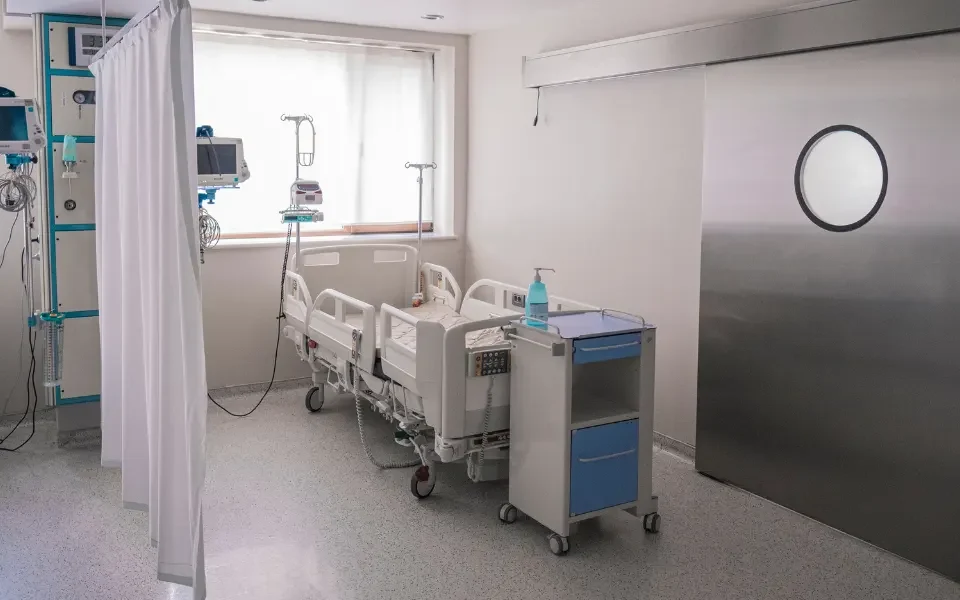
What is a medical respirator?
The medical ventilator is also called a respirator. It helps people breathe when they cannot or do not breath enough. The machine provides oxygen to the lungs and eliminates carbon dioxide, thereby providing a form of life-support for people with respiratory issues.
Types of hospital ventilators
Invasive and non-invasive ventilators are the two types. Noninvasive ventilators do not require the use of an ETT, but they still assist breathing through a more efficient inhalation and exhalation.
Non Invasive Ventilation
A face mask that covers the patient’s mouth and nose is used to assist in breathing.
For non-invasive ventilating, foam mattresses, pillows and blankets are used to prop the heads of patients. This prevents them from getting pressure sores, while also allowing more air into their lungs. Patients who are able to breathe independently but can’t maintain an appropriate level of oxygen within their blood will usually benefit from non-invasive ventilation. This is used by patients who need additional oxygen during the night, but don’t want to wear a mask all day.
Invasive ventilation
Invasive Ventilation is the process of inserting a tube into the patient’s airway (or trachea) to deliver air directly to their lungs. This procedure is known as “intubation”.
This tube is connected to a ventilator that helps oxygenate your blood. The tube connects the ventilator to a machine which measures blood pressure, respiration rate and the amount of oxygen present in blood.

How does a medical respirator work
A tube is used to deliver air, often with additional oxygen.
The tube may be placed through the surgical incision in the neck or in the mouth.
It controls breathing rate, pressure, and depth to ensure adequate oxygenation.
For what is a ventilator for medical use used?
Respiratory Failure:
Patients with respiratory conditions such as COVID-19 severe, pneumonia, ARDS or lung injury will need a ventilator.
Surgery:
These are used in surgery, under anesthesia and when the patient cannot breathe independently.
Other Conditions:
Other conditions that cause breathing problems can also be treated with a ventilator.